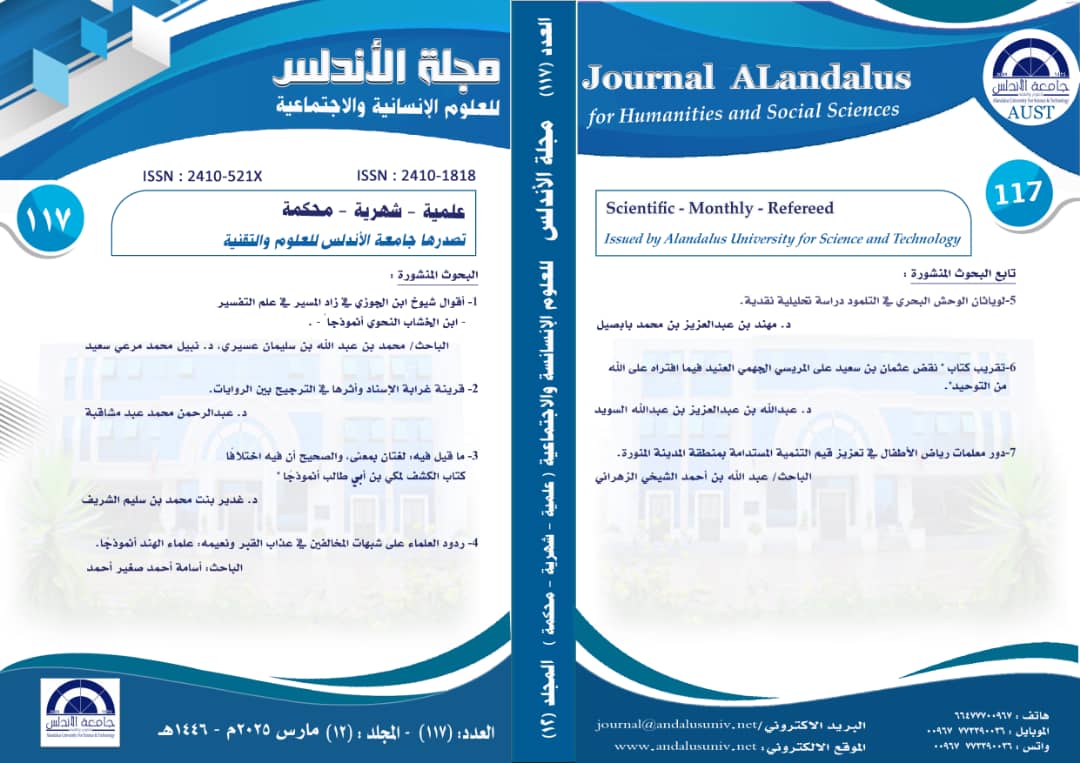
Sayings of Sheikhs ibn Al-Jawzi in Zad Al-Masir fi Ilm Al-Tafsir: Ibn Al-Khashab Al-Nahwi is an Example 10.35781/1637-000-117-001
Article Sidebar
Main Article Content
Abstract
In this research, the researcher conducted an inductive, descriptive, and analytical study, through the interpretation of "Zad Al-Masir fi Ilm Al-Tafsir" by Abu Al-Faraj Ibn Al- Jawzi, by collecting the slayings of his Sheikh Ibn Al-Khashab Al-Nahwi that were mentioned in this interpretation and studying them, and they amounted to four sayings. The most important objectives of this research are: to highlight an important source of interpretation according to Ibn al-Jawzi, which is the transmission from his sheikhs from whom he took interpretation and language. The research included an introduction, two chapters, and a conclusion. In the introduction, the researcher mentioned the importance of the research, the reasons for choosing it, previous related studies, its objectives, questions, research methodology, procedures, and research plan. Then, in the first chapter, the researcher discussed: the definition of Ibn al- Khashab, the grammarian, the sheikh of Ibn al-Jawzi, who had statements in his interpretation. In the second chapter, the researcher discussed the statements of Ibn al-Khashab, the grammarian, and they were studied according to the order of the surahs of the Holy Qur'an. Then, the conclusion, which included the most important results and recommendations that the researcher reached. The researcher relied on the (descriptive- analytical inductive) method. Among the most prominent results that he reached: Ibn al-Jawzi cited the statements of his sheikh Ibn al-Khashab in the context of arguing for them and relying on them. The researcher recommended at the end of his research to collect and study the statements of the sheikhs of the interpreters through their books. Thus, the research entitled: (The Statements of the Sheiks of Ibn al-Jawzi in Zad al-Masir in the Science of Interpretation Ibn al-Khashab the grammarian as a model).