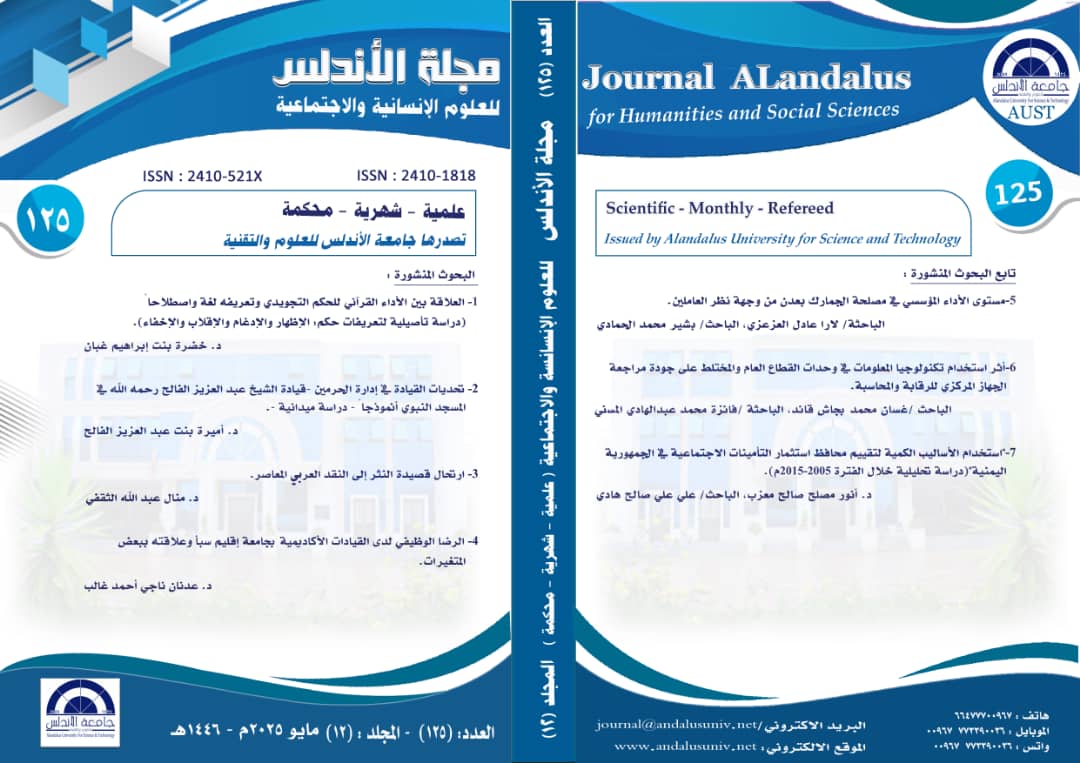
Leadership Challenges in the Management of the Two Holy Mosques: The Leadership of Sheikh Abdulaziz Al-Faleh "May Allah have Mercy on him" in the Prophet's Mosque as a Model: A Field Study 10.35781/1637-000-125-002
Article Sidebar
Main Article Content
Abstract
This study aims to analyze the leadership practices of His Excellency Sheikh Abdulaziz bin Abdullah Al-Faleh (may Allah have mercy on him) during his tenure as the head of the Prophet’s Mosque. The study explores a distinctive Saudi leadership experience within a religious and administratively complex environment. Grounded in the Leadership Practices Inventory (LPI) model by Kouzes & Posner, the research adopted a mixed-methods approach: quantitative data were collected via a structured questionnaire based on five core leadership practices, while qualitative data were gathered through open-ended responses, field testimonials, and relevant documents. The findings revealed that the most prominent leadership behaviors demonstrated by Sheikh Al-Faleh were: Modeling the Way, Enabling Others to Act, and Encouraging the Heart. These practices positively influenced the organizational climate, promoting discipline, collaboration, and institutional satisfaction. Qualitative responses consistently highlighted leadership traits such as humility, fairness, field presence, and trust-based leadership. The results aligned closely with principles of transformational and servant leadership, indicating the potential to adapt this model to value-driven nonprofit settings.