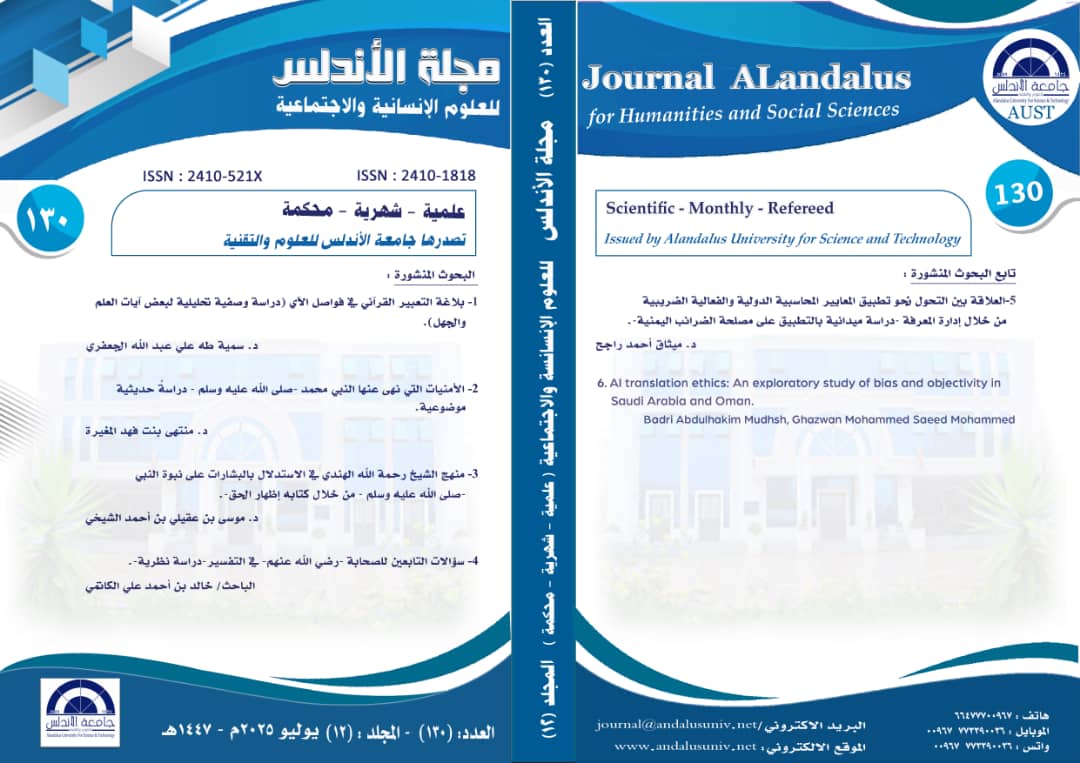
Al Translation Ethics: An Exploratory Study of Bias and Objectivity in Saudi Arabia and Oman ر
Article Sidebar
Main Article Content
Abstract
The ethical issues about AI-powered translation systems are becoming more prevalent as they transform communication between different languages and cultures. Even though there is growing globally concern about this topic, there is still a notable lack of research into the ethics of AI translation, particularly in the unique sociolinguistic and diglossic contexts like those of Saudi Arabia and Oman. Hence, this exploratory study seeks to fill that gap by exploring how bias and objectivity play out in AI translations ethics within these often-overlooked regions. Data was collected from 50 individuals experienced in the field of AI translation via a Google Form questionnaire and analyzed using SPSS (Version 26). Findings revealed that the respondents highlighted the concern of bias, losing aspects of the culture, and a lack of objectivity, which have diminished their trust in the output in its purest form. All of this demonstrates the need for ethical oversight on the part of humans in the process of their translations. They suggested that localized AI, better education of translators, and robust ethical guidelines for the use of AI in their contexts could help in better integrating AI translation ethically. Furthermore, the findings shed important light on the ethical challenges surrounding AI-assisted translation within the socio-cultural and linguistic contexts of Saudi Arabia and Oman. Participants - translation practitioners, teachers, and researchers - demonstrated high familiarity with AI translation tools but simultaneously expressed significant ethical concerns, particularly regarding bias, objectivity, and trust. Accordingly, the implications and recommendations are presented.