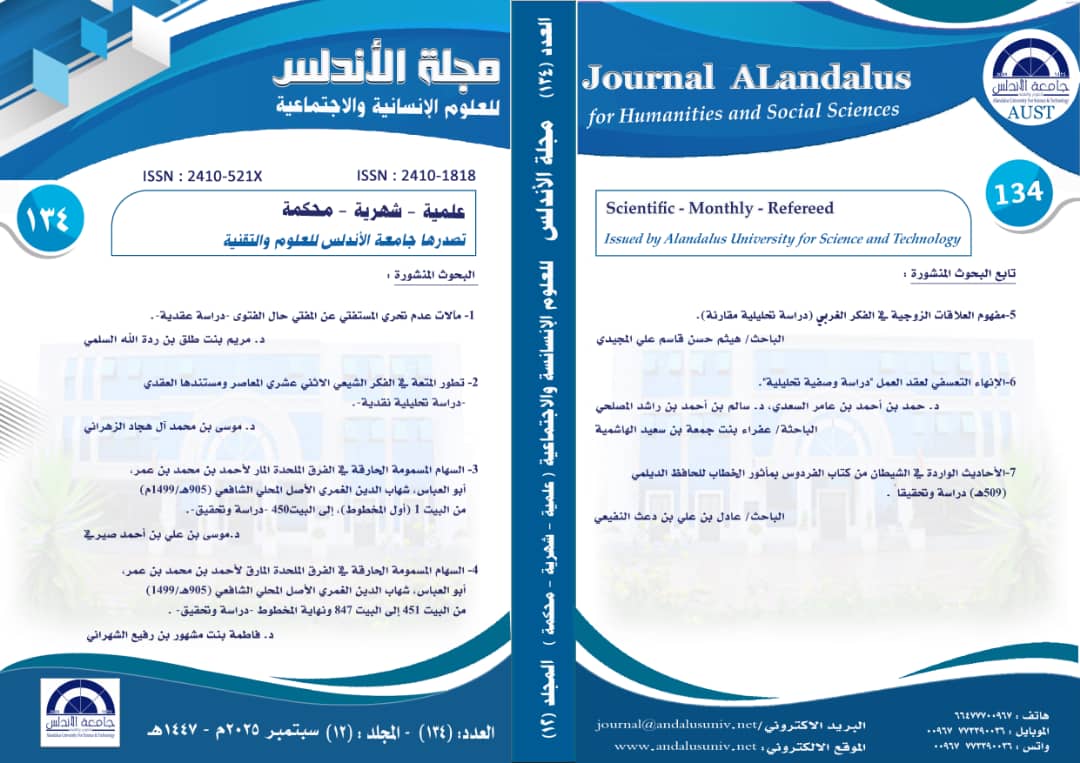
The Burning Poisoned Arrows against the Heretical and Rebellious Sects by Aḥmad ibn Muḥammad ibn Umar, Abū Al-ʿAbbās, Shihāb Al-Dīn alGhamrī Al-Aṣl Al-Maḥallī Al-Shāfiʿī D. 905 AH. / 1499 CE. Edited Text: from Verse 1, the Beginning of the Manuscript, up 10.35781/1637-000-134-003
Article Sidebar
Main Article Content
Abstract
This study examines the poem of Imam Aḥmad ibn Muḥammad Abū al-ʿAbbās al-Ghamrī (d. 905 AH), entitled “Al-Sihām al-Sumūm al-Khāriqa fī al-Firaq al-Mulḥida al-Māriqa” (“The Piercing Poisoned Arrows Against the Apostate Heretical Sects”), as a doctrinal and literary text that reflects the intellectual and social dynamics of the Mamluk era, particularly during the reign of Sultan al-Mu’ayyad Shaykh. The significance of this poem lies in its exemplary use of poetry as a medium to defend Islamic creed, combining argumentative rigor with aesthetic expression, thus fulfilling both educational and intellectual purposes. The research explores three dimensions of the poem: theological, social, and literary. On the theological level, al-Ghamrī sought to affirm the principles of Ahl al-Sunna wa al-Jamāʿa and refute the claims of deviant sects that denied or distorted fundamental aspects of faith. On the social level, he depicted the moral and behavioral deviations that had spread within Mamluk society, warning against their destructive impact on communal unity. On the literary level, the poem reveals a coherent structure enriched with rhetorical imagery and dialectical reasoning, making it a powerful and persuasive text. The study concludes that doctrinal poetry in the later Islamic periods was not merely didactic or polemical verse, but rather a mirror of historical and cultural realities, offering valuable insights into intellectual and social conflicts. Therefore, reviving, editing, and critically studying such texts contributes significantly to both Islamic studies and literary scholarship, while reaffirming the role of poetry in defending creed and preserving identity.