
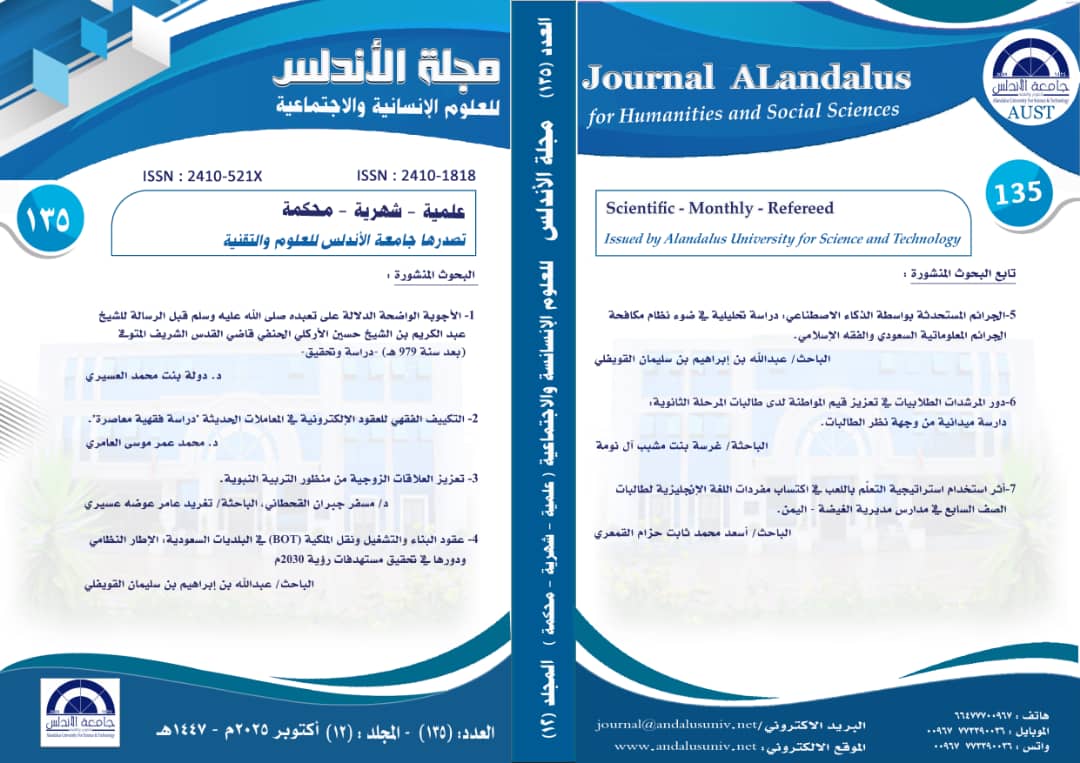
Emerging Crimes Committed via Artificial Intelligence: An Analytical Study in Light of the Saudi Anti-Cybercrime Law and Islamic Jurisprudence 10.35781/1637-000-135-005
Article Sidebar
Main Article Content
Abstract
This research aims to analyze the emerging criminal patterns associated with recent advancements in generative artificial intelligence, with a focus on assessing the adequacy of the Saudi Anti-Cybercrime Law in addressing them. Using an analytical methodology, the research examines the most prominent forms of criminal exploitation of AI, analyzes the legal complexities related to criminal characterization and the attribution of criminal liability, and links them to the urgent need for legislative development to counter these new threats. The research concludes that while the current law can accommodate some of these acts, it faces a fundamental challenge in addressing the issue of criminal liability and proving crimes committed using these technologies, necessitating legislative intervention to provide clear solutions. Furthermore, the research reached essential findings, most notably that the provisions of the Saudi Anti- Cybercrime Law, with their inherent flexibility, are capable of accommodating emerging criminal patterns. Nevertheless, the greatest challenge lies in the "problem of attributing criminal liability," given the multiplicity of actors involved. The research concludes that Islamic jurisprudence offers a robust analytical framework to address this issue through its well-established distinction between direct action and causation, thereby opening the door to a jurisprudential and legal model for distributing liability among the actors within intelligent systems.