
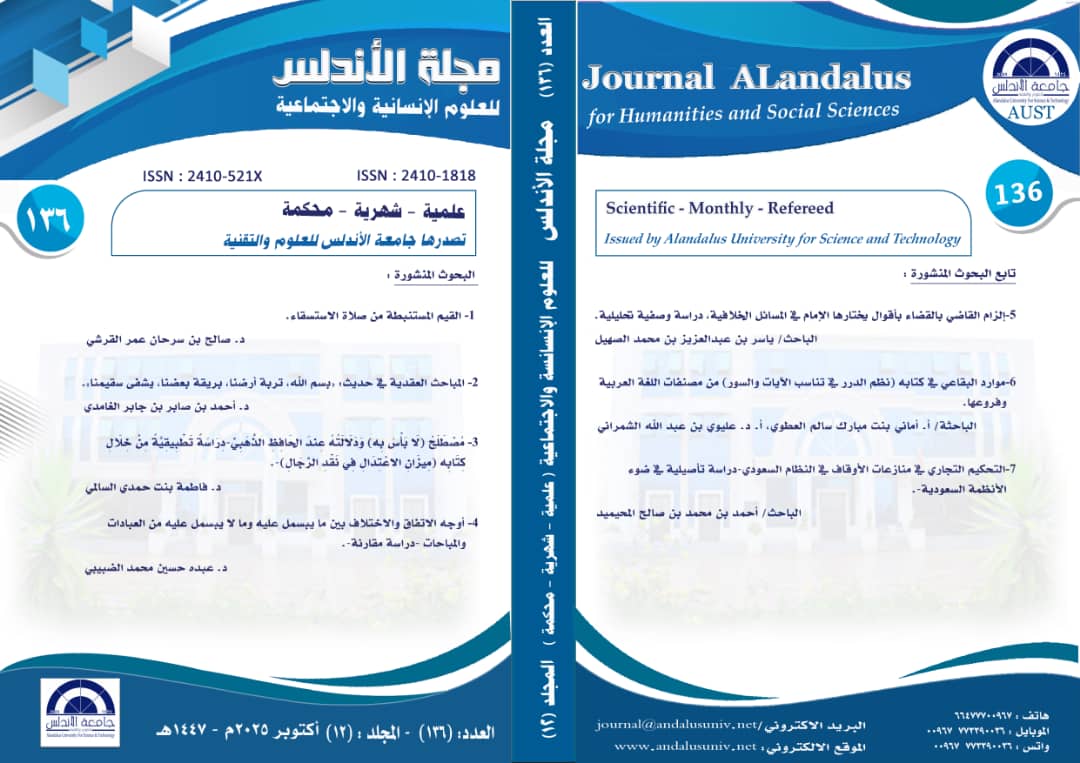
Obligating the Judge to Follow the Opinions Chosen by the Ruler in Jurisprudence Topics that Scholars have Differed on, a Descriptive: Analytical Study 10.35781/1637-000-136-005
Article Sidebar
Main Article Content
Abstract
The question of whether a Muslim ruler may compel judges to adjudicate in accordance with the opinions he selects in matters of juristic disagreement has been the subject of considerable controversy among contemporary scholars. This study examines the diverse terminologies employed to designate this form of judicial obligation, defines the relevant concepts and technical terms, and surveys the principal juristic positions on the issue, identifying their leading proponents and the evidentiary bases upon which they rest. The research subsequently advances the position deemed most persuasive, while also seeking to contribute original value by adducing novel arguments in support of the preferred view and by articulating new refutations of opposing positions- arguments which, to the best of the researcher's knowledge have not been previously addressed in the scholarly literature. Key Findings: The controversy over this issue is of ancient origin and cannot be regarded as a purely modern development. Although the issue has assumed new forms in contemporary discourse, in essence it remains identical to the debate found among the classical jurists. The study concludes that such compulsion is permissible and demonstrably practiced during the era of the Companions and the Successors (may Allah be pleased with them).