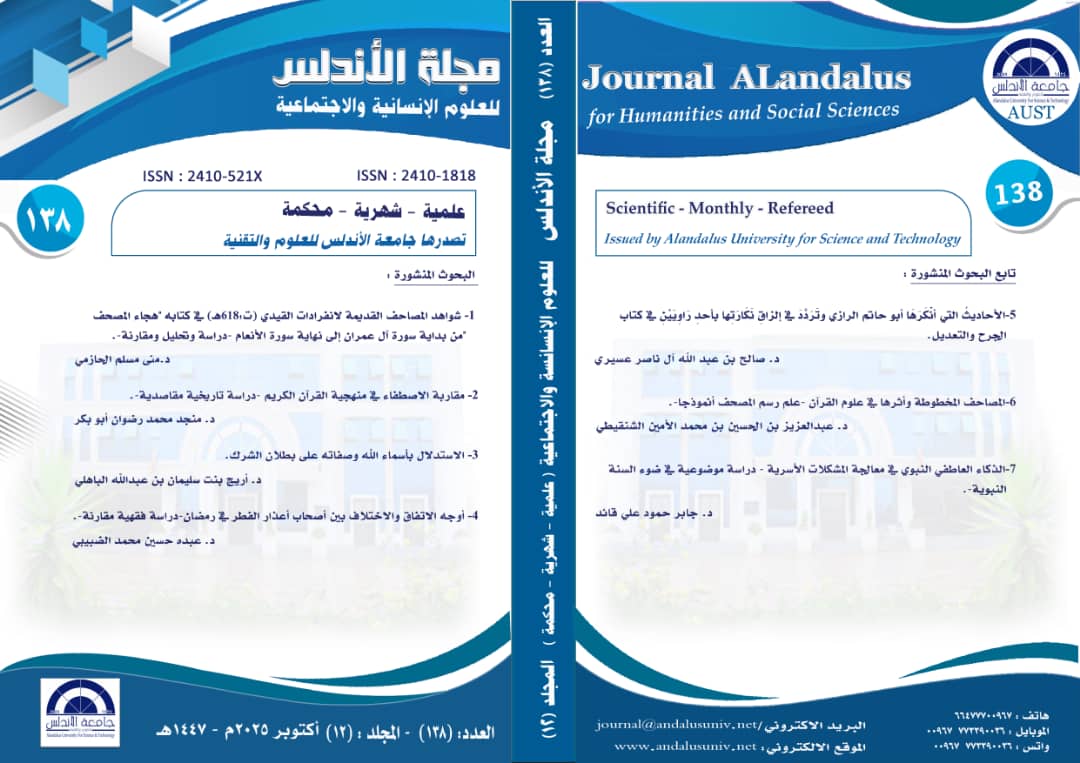
The Approach of Istifâ in the Methodology of the Holy Qur'an: A Maqasidi Research 10.35781/1637-000-138-002
Article Sidebar
Main Article Content
Abstract
A comprehensive examination of both Makkan and Madinan Qurʾānic verses reveals the pervasive presence of the Divine Khilāfah (vicegerency) project throughout the Qurʾān, articulated through diverse linguistic and conceptual mechanisms. This research highlights one of the foundational instruments underpinning that project: the Qurʾān’s deliberate invocation of the term al-Iṣṭifāʾ (Divine Election) in precise theological and historical contexts. Through this concept, the Qurʾānic discourse discloses the Wise Lawgiver’s election of five indispensable elements essential for realizing the Divine project of ḥākimiyyah—the governance of humankind in accordance with Divine revelation. A meticulous exegetical and analytical approach demonstrates that these five elements: (1) religion as embodied in the revealed scriptures, (2) Gabriel as the conveyor of revelation, (3) the Prophets and Messengers as recipients of the Divine mandate, (4) the heirs of the Prophets as continuators of that mission, (5) the laborers preparing the physical domain of the Islamic Khilāfah—operate synergistically to fulfill the higher maqāṣid (objectives) of the Sharīʿah. The study employs an inductive method of analyzing the Qurʾānic usage of al-Iṣṭifāʾ, supported by historical, linguistic, and rhetorical analysis, and concludes with a synthesis of its key findings and teleological implications.