
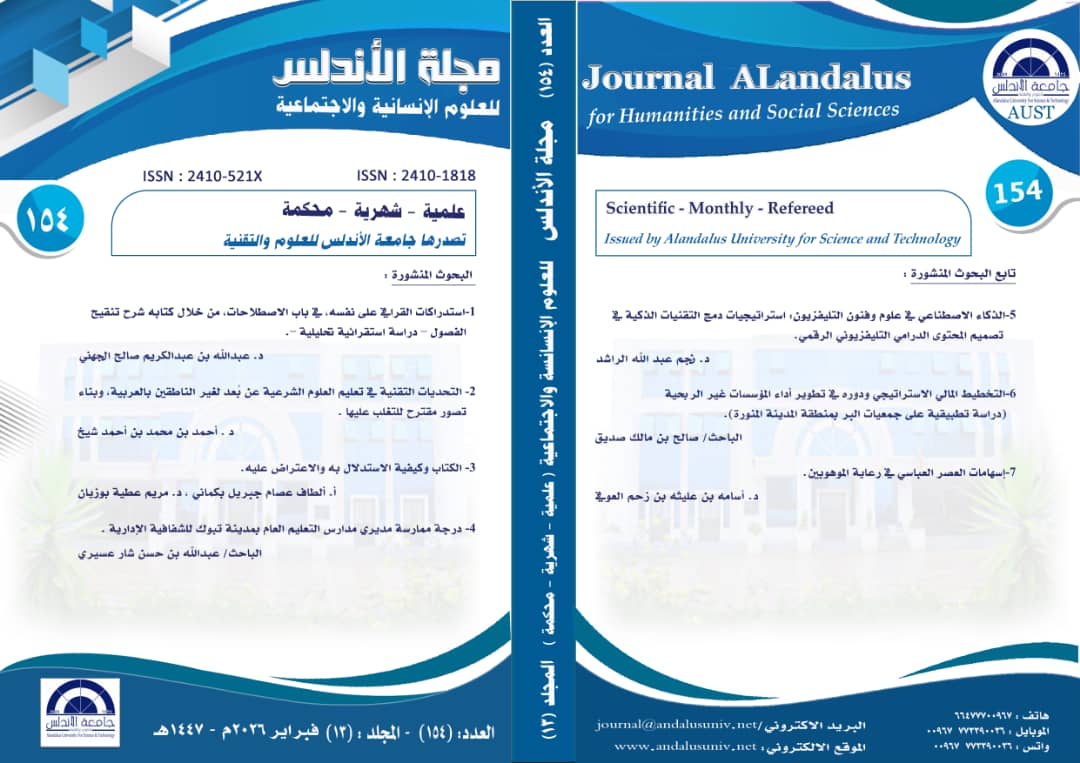
Strategic Financial Planning and Its Role in Developing the Performance of Non-Profit Organizations: An Applied Study on Charity Associations in the Madinah Region 10.35781/1637-000-154-006
Article Sidebar
Published:
Mar 7, 2026
Keywords:
التخطيط المالي الاستراتيجي | الجمعيات الخيرية | الاستدامة المالية | الحوكمة | رؤية 2030 | Strategic Financial Planning | Charitable Organizations | Financial Sustainability | Governance | Vision 2030
Main Article Content
Abstract
Abstract: This study aims to examine the impact of strategic financial planning on developing the performance of non-profit organizations, taking the Charity Associations in the Madinah Region as an applied model during the period (2015-2024). The researcher adopted a descriptive-analytical approach, supported by field data and statistics, to analyze the current state of financial planning and the adoption level of strategic tools within these associations. The study found that associations implementing integrated strategic financial planning achieve more sustainable financial and organizational performance, distinguished by their ability to manage resources with effectiveness, efficiency, and transparency. Conversely, the field results revealed structural challenges; notably, 61% of the associations suffer from weak administrative structures, and 53% lack integrated annual financial plans , alongside a shortage of qualified personnel, a fragile reliance on seasonal funding, and weak adoption of modern technical systems. The research recommended adopting digital (ERP) systems for financial planning, diversifying funding sources through endowments and social investment projects, and training financial staff in analysis and monitoring tools. It emphasized that applying strategic financial planning has become an institutional necessity, enabling charitable associations to meet the requirements of Saudi Vision 2030 and enhance their sustainable social impact. Keywords: Strategic Financial Planning – Charitable Organizations – Financial Sustainability – Governance – Vision 2030
Article Details
Section
المقالات