
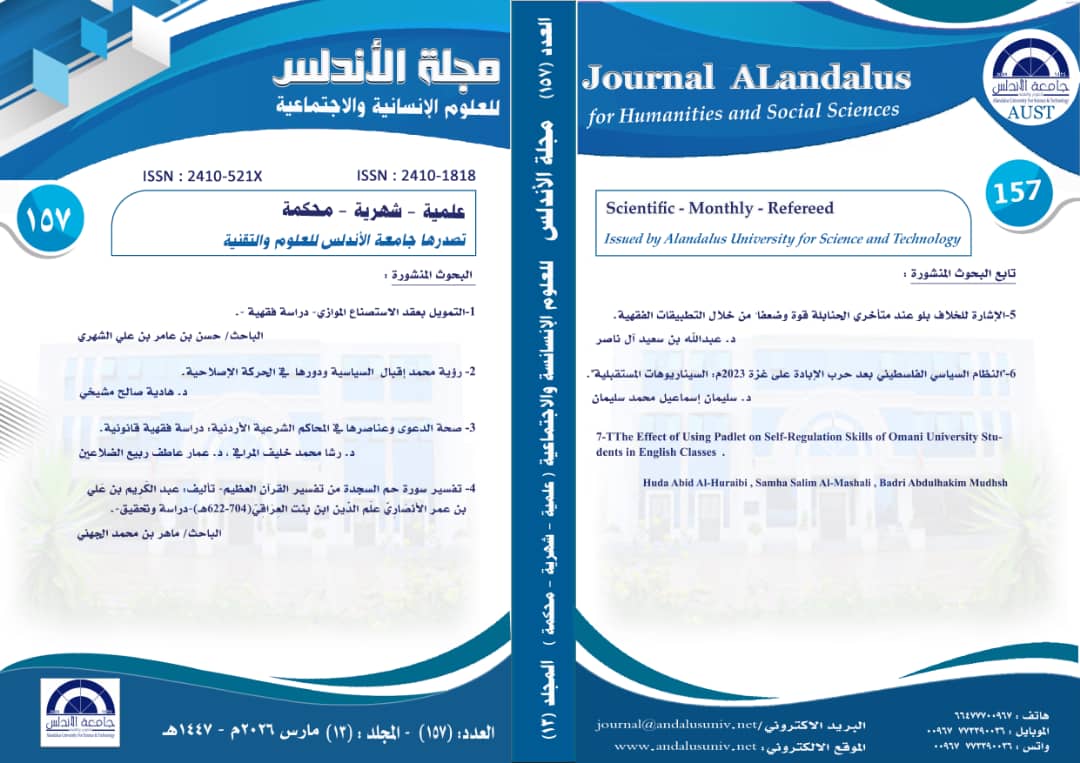
التمويل بعقد الاستصناع الموازي: دراسة فقهية 10.35781/1637-000-157-001
Article Sidebar
Published:
May 11, 2026
Keywords:
الاستصناع | الاستصناع الموازي | التمويل الإسلامي | العقود المالية المعاصرة | Istisna' | Parallel Istisna' | Islamic Finance | Contemporary Financial Contracts
Main Article Content
Abstract
Abstract
Abstract This research aims to study parallel Istisnaʿ financing and clarify its juristic characterization in Islamic jurisprudence. The study discusses the concept of parallel Istisnaʿ, explains the terminology of the title, and examines the juristic characterization of the Istisnaʿ contract and its legal legitimacy in Islamic law. It also outlines the pillars and conditions of the contract and differentiates it from similar financial contracts. Furthermore, the study presents the practical application of parallel Istisnaʿ in contemporary Islamic finance and explains how profit is generated through concluding two separate contracts that share the same specifications but differ in price. The research adopts an inductive and analytical methodology by collecting juristic opinions related to Istisnaʿ and analyzing them in light of contemporary financial practices. The study concludes that parallel Istisnaʿ consists of two independent contracts that should not be legally tied in a manner that constitutes a conditional contract within another contract. The preferred juristic view supports its permissibility provided that the required Shariah conditions are fulfilled and elements of riba (usury) and gharar (excessive uncertainty) are avoided. Keywords Istisnaʿ, Parallel Istisnaʿ, Islamic Finance, Contemporary Financial Contracts.
Abstract This research aims to study parallel Istisnaʿ financing and clarify its juristic characterization in Islamic jurisprudence. The study discusses the concept of parallel Istisnaʿ, explains the terminology of the title, and examines the juristic characterization of the Istisnaʿ contract and its legal legitimacy in Islamic law. It also outlines the pillars and conditions of the contract and differentiates it from similar financial contracts. Furthermore, the study presents the practical application of parallel Istisnaʿ in contemporary Islamic finance and explains how profit is generated through concluding two separate contracts that share the same specifications but differ in price. The research adopts an inductive and analytical methodology by collecting juristic opinions related to Istisnaʿ and analyzing them in light of contemporary financial practices. The study concludes that parallel Istisnaʿ consists of two independent contracts that should not be legally tied in a manner that constitutes a conditional contract within another contract. The preferred juristic view supports its permissibility provided that the required Shariah conditions are fulfilled and elements of riba (usury) and gharar (excessive uncertainty) are avoided. Keywords Istisnaʿ, Parallel Istisnaʿ, Islamic Finance, Contemporary Financial Contracts.
Article Details
Issue
Section
المقالات