
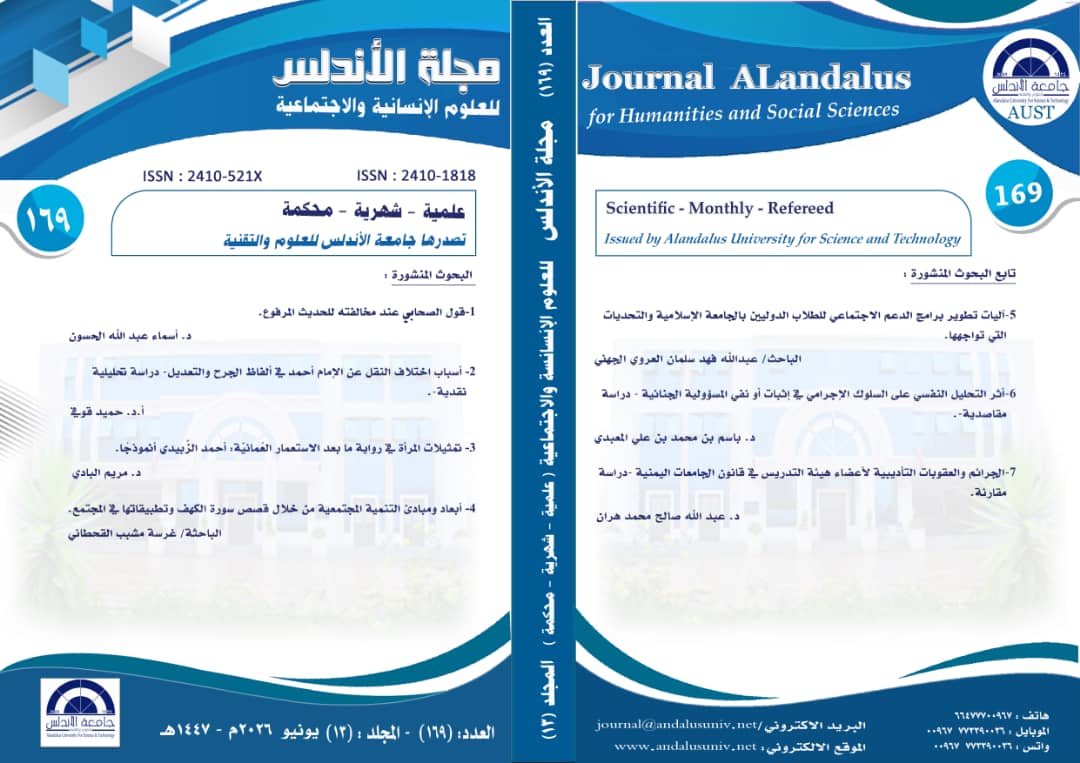
The Impact of Psychoanalysis on Criminal Behavior in Dis/Proving Criminal Culpability: A Maqāṣid Study 10.35781/1637-000-169-006
Article Sidebar
Published:
Oct 14, 2026
Keywords:
السلوك الإجرامي | التحليل النفسي | المسؤولية الجنائية | مقاصد الشريعة الإسلامية | Criminal Behavior | Psychoanalysis | Criminal Responsibility | Maqāṣid Al-Sharīʿah
Main Article Content
Abstract
Abstract
This study aims to examine the relationship between the psychoanalysis of criminal behavior and its impact on determining criminal culpability from a maqāṣid-based perspective, through linking the principles of Sharīʿah with contemporary criminal law frameworks. The central research question investigates the extent to which psychological factors influence the existence or absence of criminal culpability, as well as the Sharīʿah-based and legal standards governing their recognition. The study adopts a descriptive-analytical methodology grounded in the objectives of Sharīʿah (Maqāṣid al-Sharīʿah), through examining relevant Sharīʿah texts, analyzing the views of classical and contemporary jurists, and exploring the extent to which the related Saudi criminal regulations apply them, followed by a systematic comparative analysis. The findings reveal a fundamental convergence between Islamic jurisprudence (Fiqh) and modern legal systems regarding cognition and free will as essential foundations of criminal culpability. The study also highlights the practical Saudi legal approach, which subjects claims of psychological disorders to specialized medical evaluation and disciplined judicial assessment. Furthermore, Sharīʿah demonstrates a deeper maqāṣid-oriented foundation that balances the preservation of human life with the realization of justice. The study recommends developing Sharīʿah-and legally-compliant psychological assessment mechanisms to enhance fairness in judicial application Keywords: Criminal behavior, psychoanalysis, criminal responsibility, Maqāṣid al-Sharīʿah.
This study aims to examine the relationship between the psychoanalysis of criminal behavior and its impact on determining criminal culpability from a maqāṣid-based perspective, through linking the principles of Sharīʿah with contemporary criminal law frameworks. The central research question investigates the extent to which psychological factors influence the existence or absence of criminal culpability, as well as the Sharīʿah-based and legal standards governing their recognition. The study adopts a descriptive-analytical methodology grounded in the objectives of Sharīʿah (Maqāṣid al-Sharīʿah), through examining relevant Sharīʿah texts, analyzing the views of classical and contemporary jurists, and exploring the extent to which the related Saudi criminal regulations apply them, followed by a systematic comparative analysis. The findings reveal a fundamental convergence between Islamic jurisprudence (Fiqh) and modern legal systems regarding cognition and free will as essential foundations of criminal culpability. The study also highlights the practical Saudi legal approach, which subjects claims of psychological disorders to specialized medical evaluation and disciplined judicial assessment. Furthermore, Sharīʿah demonstrates a deeper maqāṣid-oriented foundation that balances the preservation of human life with the realization of justice. The study recommends developing Sharīʿah-and legally-compliant psychological assessment mechanisms to enhance fairness in judicial application Keywords: Criminal behavior, psychoanalysis, criminal responsibility, Maqāṣid al-Sharīʿah.
Article Details
Issue
Section
المقالات