
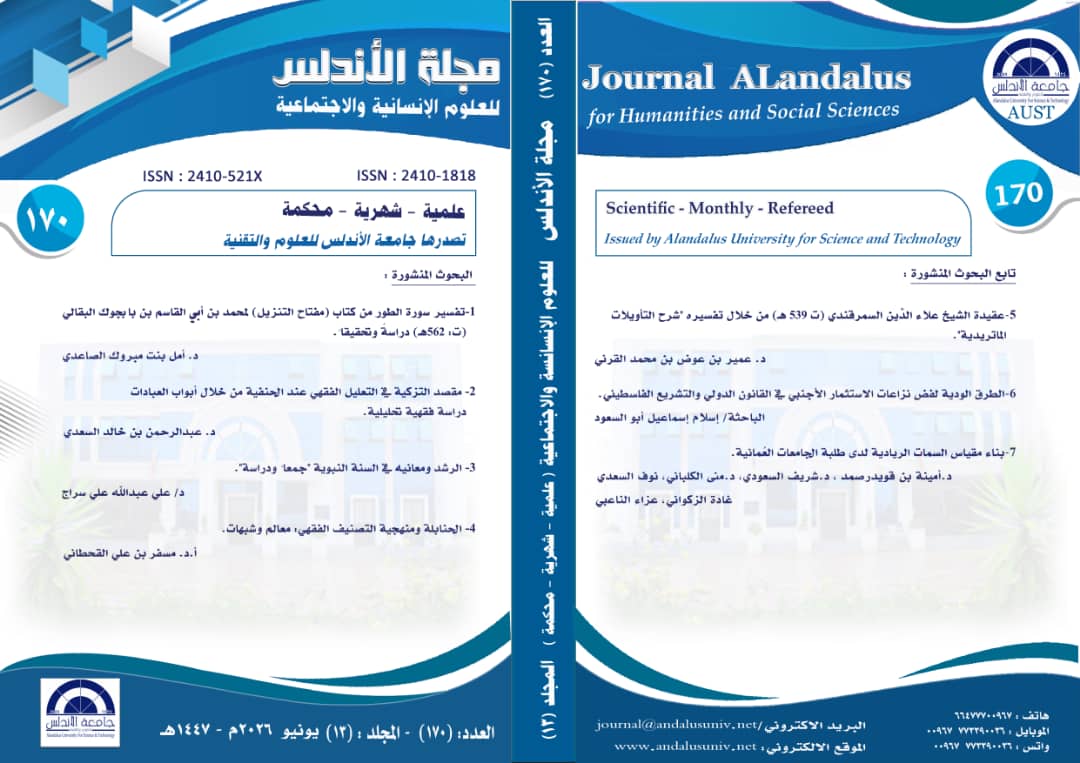
The Hanbali School and the Methodology of Jurisprudential Classification: Key Features and Misconceptions 10.35781/1637-000-170-004
Article Sidebar
Published:
Oct 14, 2026
Keywords:
الحنابلة | الاجتهاد | أحمد بن حنبل | التشدد المذهبي | فقه | Hanbali School | Ijtihād
Main Article Content
Abstract
Abstract
Abstract: Title: The Hanbali School and the Methodology of Jurisprudential Authorship: Features and Misconceptions This study, authored by Mesfer bin Ali Al-Qahtani, examines the methodology of legal writing and scholarly composition within the Hanbali school of Islamic jurisprudence. It surveys the most significant Hanbali works from the era of Imam Ahmad ibn Hanbal to the modern period, while tracing the historical development and major stages of Hanbali legal scholarship. The research highlights the methodological characteristics of Hanbali literature, including its strong adherence to scriptural texts, recognition of multiple transmitted opinions, attention to Islamic ethics and conduct, and commitment to independent legal reasoning (ijtihād) and juristic preference (tarjīḥ). The study also addresses the principal misconceptions associated with the school, particularly claims of excessive legal rigidity and sectarian exclusivism. It demonstrates that the Hanbali tradition has historically been characterized by jurisprudential breadth, facilitation, the removal of undue hardship, and a firm reliance on textual evidence. The study concludes that the Hanbali intellectual heritage constitutes a rich and influential scholarly legacy that continues to play a significant role in both classical and contemporary Islamic jurisprudence. Keywords: Hanbali School; Ijtihād (Independent Legal Reasoning); Ahmad ibn Hanbal; Sectarian Rigidity; Islamic Jurisprudence (Fiqh).
Abstract: Title: The Hanbali School and the Methodology of Jurisprudential Authorship: Features and Misconceptions This study, authored by Mesfer bin Ali Al-Qahtani, examines the methodology of legal writing and scholarly composition within the Hanbali school of Islamic jurisprudence. It surveys the most significant Hanbali works from the era of Imam Ahmad ibn Hanbal to the modern period, while tracing the historical development and major stages of Hanbali legal scholarship. The research highlights the methodological characteristics of Hanbali literature, including its strong adherence to scriptural texts, recognition of multiple transmitted opinions, attention to Islamic ethics and conduct, and commitment to independent legal reasoning (ijtihād) and juristic preference (tarjīḥ). The study also addresses the principal misconceptions associated with the school, particularly claims of excessive legal rigidity and sectarian exclusivism. It demonstrates that the Hanbali tradition has historically been characterized by jurisprudential breadth, facilitation, the removal of undue hardship, and a firm reliance on textual evidence. The study concludes that the Hanbali intellectual heritage constitutes a rich and influential scholarly legacy that continues to play a significant role in both classical and contemporary Islamic jurisprudence. Keywords: Hanbali School; Ijtihād (Independent Legal Reasoning); Ahmad ibn Hanbal; Sectarian Rigidity; Islamic Jurisprudence (Fiqh).
Article Details
Issue
Section
المقالات