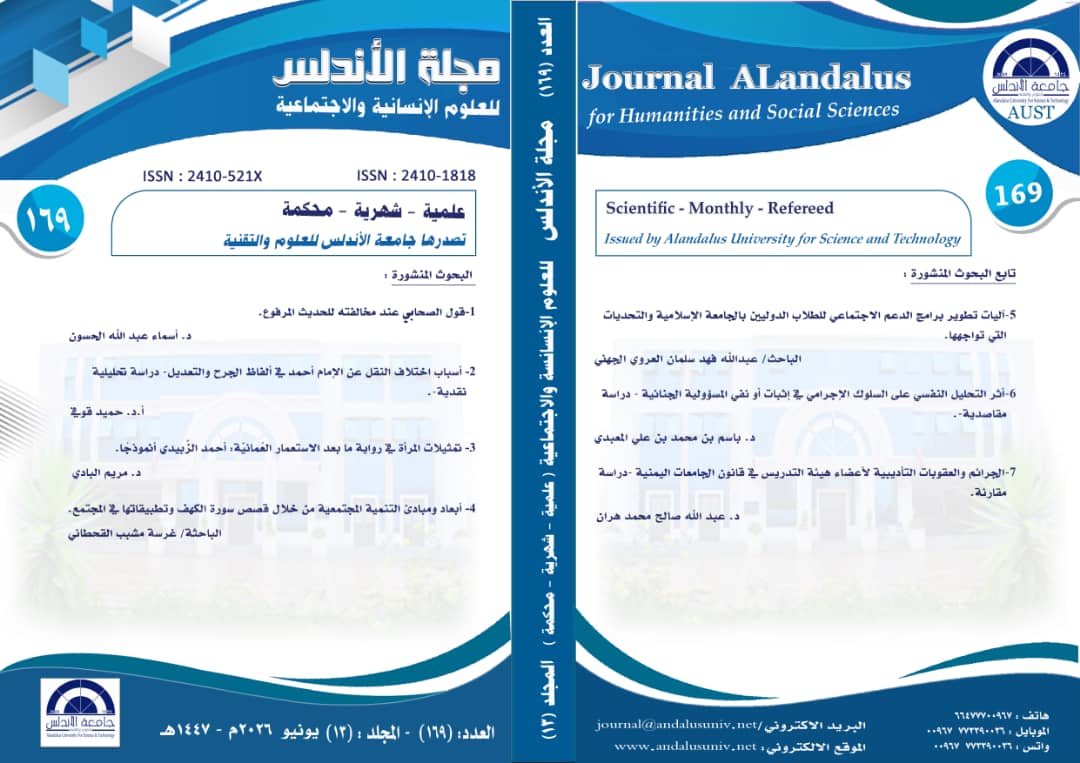
“Factors Contributing to Variations in the Transmission of Imām Aḥmad’s Critical Terminology in al-Jarḥ wa al-Taʿdīl: A Critical Analytical Study” أ.د. حميد قوفي*
Article Sidebar
Main Article Content
Abstract
This study investigates the problem of discrepancies in the transmitted wordings of jarḥ wa taʿdīl statements attributed to Imām Aḥmad ibn Ḥanbal, examining their accuracy and authenticity. It centers on a key question: to what extent are critical evaluations attributed to leading authorities—among them Imām Aḥmad—reliable in light of divergences among transmitters? The study explores issues related to the establishment of wording, the reliability of sources, and varying levels of precision among narrators. Employing analytical and critical methodologies, the research traces these statements back to their original sources, distinguishing verified reports from those affected by error, editorial alteration, or paraphrasing. It concludes that much of the apparent inconsistency in Imām Aḥmad’s judgments is not genuine but results from differences in transmission, contextual detachment, or inadequate precision. The study fills a scholarly gap and offers a methodological framework for accurately attributing critical statements, thereby strengthening ḥadīth evaluation methodologies.
Keywords: Aḥmad ibn Ḥanbal; jarḥ wa taʿdīl; transmission discrepancies; ḥadīth criticism.