
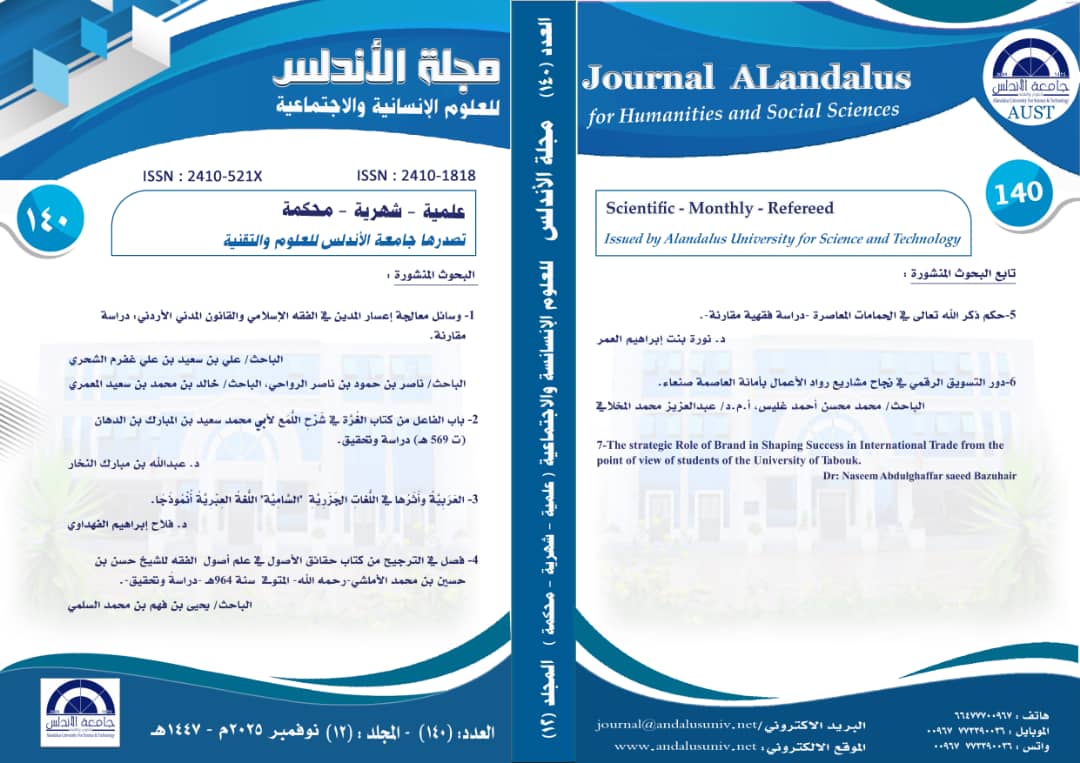
وسائل معالجة إعسار المدين في الفقه الإسلامي والقانون المدني الأردني: دراسة مقارنة 10.35781/1637-000-140-001
الشريط الجانبي للمقالة
محتوى المقالة الرئيسي
الملخص
الملخص: يهدف هذا البحث إلى دراسة وسائل معالجة إعسار المدين في الفقه الإسلامي والقانون المدني الأردني من منظورٍ مقارن، ويتناول مفهوم الإعسار وضوابطه، ووسائل معالجته في الفقه الإسلامي، بما يشمل نظرة الميسرة، وتخصيص نصيب من الزكاة، والحجر على المدين عند الحاجة، وفسخ العقود في بعض الحالات، وإجبار المدين على الكسب. كما يستعرض أحكام القانون المدني الأردني المتعلقة بالحجر على المدين المعسر، وشروطه، وإجراءاته، وآثاره على حقوق الدائنين والتزامات المدين. وقد توصل البحث إلى تميز الفقه الإسلامي بعمقه المقاصدي من خلال وسائله في معالجة الإعسار، إذ راعى جانب التكافل الاجتماعي وحق المدين في الكرامة والمعيشة، بينما ركز القانون المدني الأردني على الإطار القضائي والإجرائي لضمان استقرار المعاملات المالية وحماية الدائنين. ورغم اختلاف المنطلقات، إلا أن كليهما يلتقيان في مقصد تحقيق العدالة المالية وتنظيم المعاملات وصون الحقوق. ويوصي البحث بضرورة استلهام القوانين الوضعية للمبادئ الأخلاقية والاجتماعية المستمدة من الفقه الإسلامي في معالجة قضايا الإعسار، بما يحقق توازنًا بين حفظ حقوق الدائنين ومراعاة حال المدين. كما يدعو إلى توفير بدائل أكثر مرونة كتقسيط الديون أو إعانة المدين من أموال الزكاة تحقيقًا لمقاصد الشريعة في رفع الحرج عن المعسرين وإرساء معاني الرحمة والتكافل بين أفراد المجتمع، ويحث على نشر الوعي الفقهي والقانوني بحقوق وواجبات الطرفين، بما يسهم في الحد من النزاعات، مؤكدًا أن العدالة المالية الحقة لا تنفك عن المقاصد الشرعية القائمة على العدل والإحسان والرحمة. الكلمات المفتاحية: إعسار المدين، الإعسار المالي، الحجر على المدين، معالجة الديون، الفقه الإسلامي، القانون المدني الأردني.