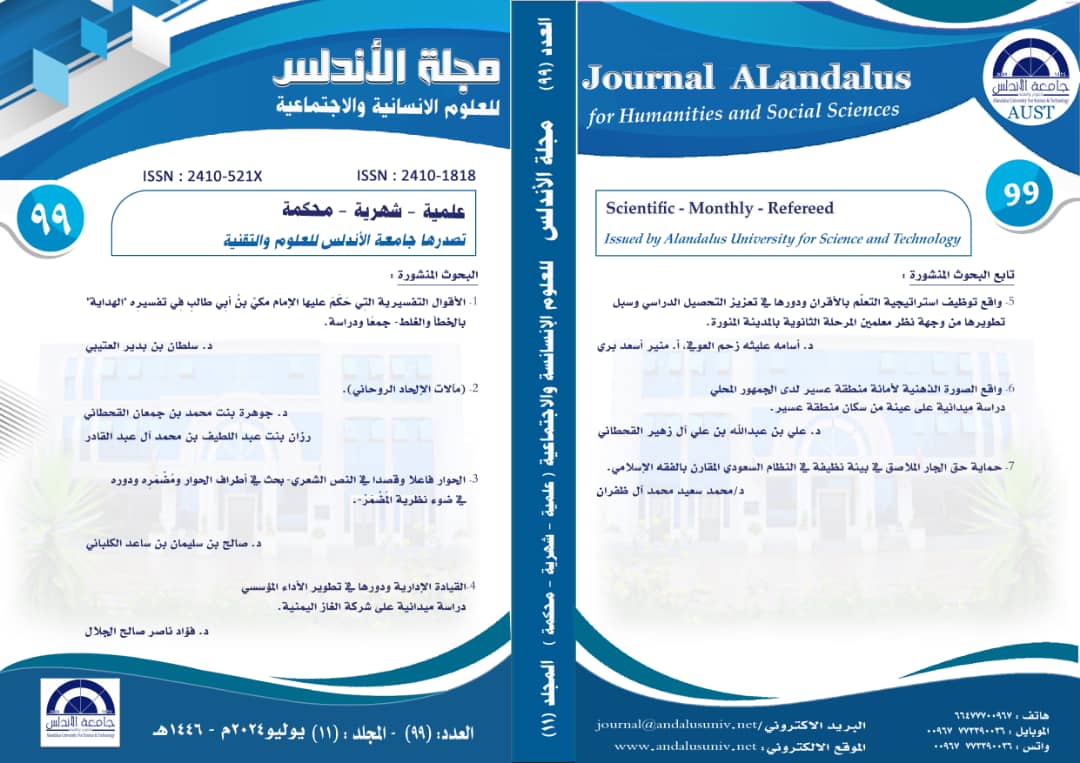
The Interpretive Statements that Imam Maki ibn Abi Talib Judged as Erroneous in his Interpretation "Al-Hidayah": Collection and Study
Article Sidebar
Main Article Content
Abstract
This research focuses on studying interpretative statements in which errors or mistakes have been identified by Imam Maki bin Abi Talib, ruling them as such to preserve the sanctity of the Book of Allah. The aim is to assess these statements and interpret them in the best possible meanings, prioritizing them, and guiding them properly. It is essential to have a balanced view among different interpretative statements to determine their levels and positions between the likely, stronger, and weaker opinions. Additionally, it aims at emphasizing the importance of precision when issuing a judgment of error or mistake in an interpretative statement. Through this research, the study highlights Imam Maki's approach in his guidance in Tafsir Al-Hadiyah, as well as the formulas he used in his interpretation when ruling on errors or mistakes. The research collects interpretative statements that Imam Maki ruled as erroneous or mistaken in his interpretation. The researcher concluded that Imam Maki had a distinct critical vision, with an array of statements judged as erroneous in interpretation, including matters of creed, language, jurisprudence, and readings. He countered falsehood and specifically refuted the Mu'tazilah for their misunderstanding of Quranic texts, while ensuring alignment with the majority of interpreters when ruling on statements. The researcher recommends the necessity of studying interpretative statements and understanding their positions between right and wrong, emphasizing the importance of accuracy and investigation when dealing with the statements of interpreters and linguists, recognizing them as human efforts, subject to review, not infallible speech. Allah knows best.