
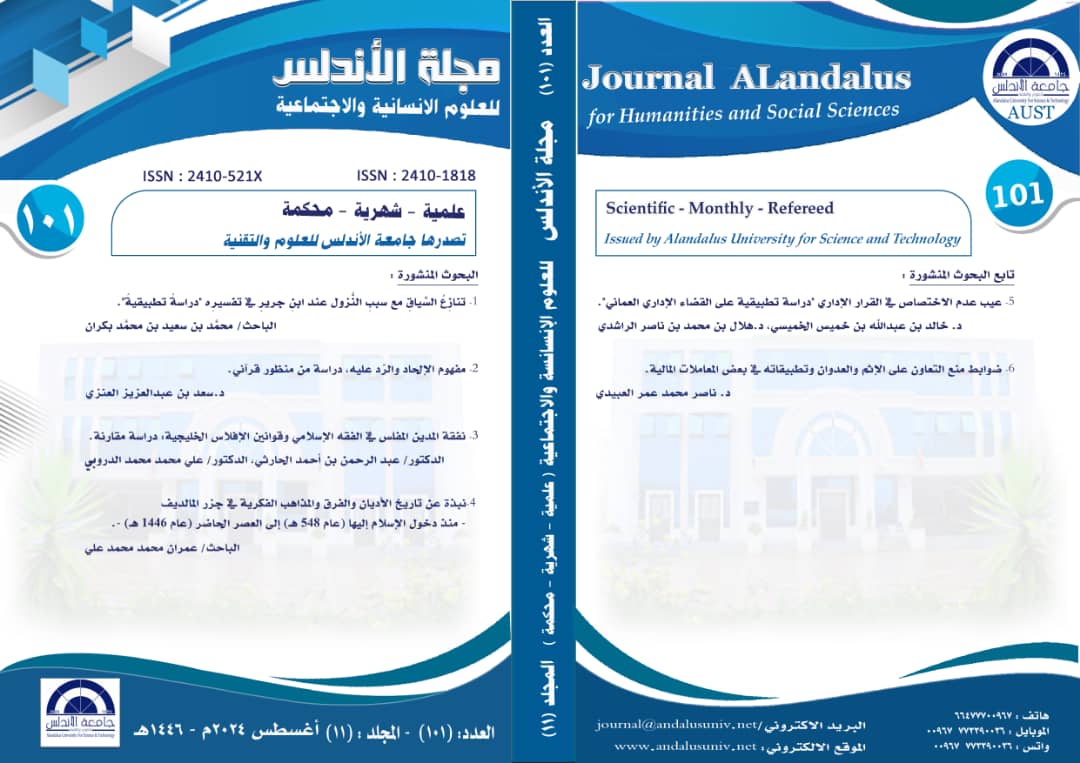
Alimony of the Bankrupt Debtor in Islamic Jurisprudence and Gulf Bankruptcy Laws: A Comparative Study
Article Sidebar
Main Article Content
Abstract
This research, following a comparative scientific approach, examines the expenses of an insolvent debtor within Islamic jurisprudence and the bankruptcy laws of the Gulf Cooperation Council countries. It outlines the concept, legitimacy, legal principles, and foundations for determining these expenses, while also identifying their scope and presenting criteria for assessment. The core issue of the study revolves around answering a principal question: How do Islamic jurisprudence and Gulf bankruptcy laws address the expenses of an insolvent debtor? The research concludes with several findings, the most significant of which is that modern bankruptcy laws have shifted their focus from liquidating the insolvent debtor's assets to reorganizing their situation and managing their finances to help them recover from their difficulties. Liquidation of assets is only pursued after all attempts at rescue and reorganization have failed. Additionally, both the jurisprudential and legal perspectives on expenses for insolvent debtors are grounded in principles of justice and humanity, preserving their dignity and humanity. The study recommends that Gulf bankruptcy laws or their executive regulations should include precise criteria for bankruptcy judges or trustees to assess the expenses of insolvent debtors, and it is essential that decisions regarding these expenses be subject to judicial review, allowing for normal avenues of appeal.