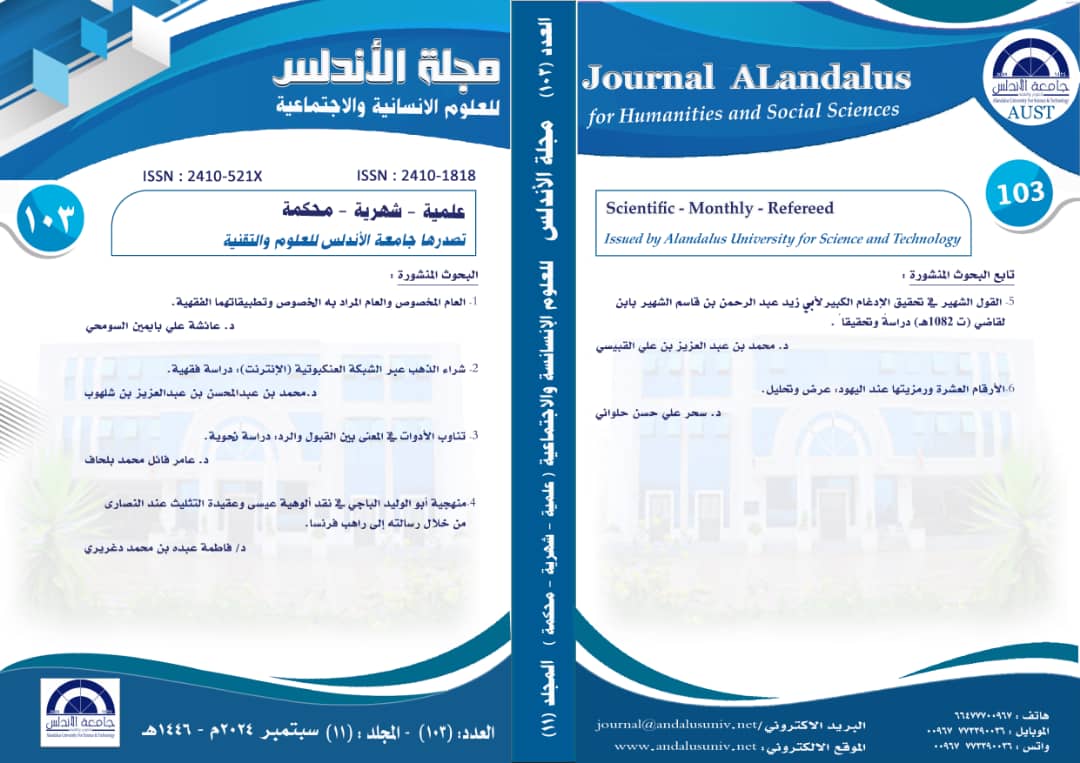
Tools Alternate in Meaning between Acceptance and Rejection: A Syntactic Study 10.35781/1637-000-103-003
Article Sidebar
Main Article Content
Abstract
This research tackled a syntactic issue that sparked debate in the ancient Arabic linguistic heritage, which is the alternation of tools in meaning that divided the Basrans and the Kufans into those who accepted it and those who rejected it. The study was divided into four sections. The first section presented the tools around which the debate arose after gathering them from linguistic sources. The second section traced the migration of the alternation phenomenon from the science of interpretation to the science of syntax and the interpretation of the interpreter and the grammarian of a tool in a text. The third section analyzed the views of grammarians on alternation and their different opinions on it between permitting and prohibiting. The fourth and final section was dedicated to the alternation phenomenon and Semitic languages, discussing the views of some Semitic language experts on this issue. After analysis and discussion, the research followed the Kufans in stating that tools alternate in meaning because they found in the Basrans' prohibition a type of restriction that is not accepted by language and is not tolerable by speech and speakers. The essence of the tool is not to indicate a single meaning, but its essence is diversity and expansion, especially since this phenomenon- the alternation phenomenon- is supported by the words of God Almighty and is also supported by the words of the Arabs.