
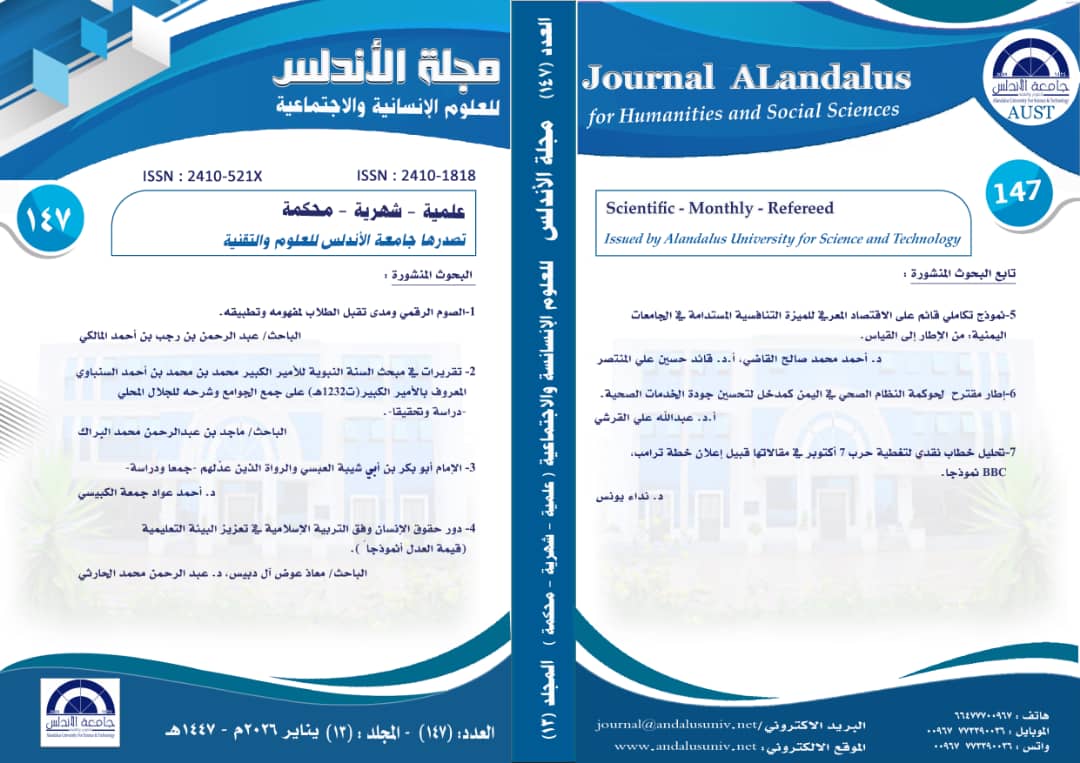
Digital Detox and the Extent of Students' Acceptance of it 10.35781/1637-000-147-001
Article Sidebar
Published:
Feb 21, 2026
Keywords:
الصوم الرقمي | الصحة النفسية للطلاب | الإدمان التقني | الرفاهية الرقمية | التحصيل الدراسي | Digital Detox | Students' Mental Health | Tech Addiction | Digital Wellbeing | Academic Achievement
Main Article Content
Abstract
This study aimed to explore the motivations and incentives that encourage students to adopt the practice of "Digital Detox." It also sought to identify the barriers and challenges that hinder students' commitment to its implementation, while measuring the impact of digital detox on the psychological, social, and academic aspects of students' lives. The study employed a descriptive survey methodology. A questionnaire was developed as the primary data collection tool and distributed to a cross-sectional sample of [257] male and female [Secondary School] students. The tool addressed two main axes: (Motivations and challenges of adopting digital detox – The impact of digital detox on the student). Key Findings: The results revealed a moderate to high level of awareness among students regarding the risks of excessive digital device use, contrasted by a relative resistance to the actual implementation of digital detox. The findings showed that the primary drivers for accepting digital detox were the "desire to improve concentration during studying" and "stress reduction." There are statistically significant differences in the degree of acceptance attributable to variables such as (Gender or Academic Specialization). Recommendations: The study recommended the necessity of integrating the culture of "Digital Detox" into school curricula and activities to enhance students' self-discipline and academic focus. It also suggested designing flexible guidance manuals to help students organize their digital time and overcome obstacles related to academic dependence on devices. Furthermore, the study emphasized activating partnership programs between schools and families to provide a supportive environment that encourages a balance between digital and real life. Keywords: Digital Detox, Students' Mental Health, Tech Addiction, Digital Wellbeing, Academic Achievement
Article Details
Issue
Section
المقالات